
Nathaniel Corey
Nathaniel Corey standing on a rock ledge above a forested valley in the Adirondacks.

Nathaniel Corey

I love combining software with hardware to solve cool problems. I made this website to showcase some of my projects and experience, and plan to keep updating it over time.

I am an ECE + CS major at Duke graduating in May 2027. This past summer I interned with the Airborne Software team at BETA Technologies, an electric aerospace company, building a Hardware Development Kit for a TI processor. The summer before, I interned at Stanley Black & Decker, where I worked on building a white-box testing framework to validate BLDC motor-controller firmware. Since January I've also been involved with Duke's Intelligent Interactive IoT (I3T) Lab, where I'm modifying a 5G base station's scheduler to prioritize latency-critical XR traffic.

I'm graduating in May 2027 and hoping to explore a new opportunity that will strengthen my embedded systems skills. I'd love to join a team working on something cool. Email me at nathaniel.corey1@outlook.com.

- Nate

Experience

BETA Technologies

BETA Technologies

Airborne Software Engineering Intern

May – Aug 2026  ·  South Burlington, VT

  • Designed and built a Hardware Development Kit (HDK) for verification and validation of airborne software on the TI AM263 MCU, used directly by a team of 5+ engineers.
  • Wired 10+ peripherals to the MCU and set up I2C, UART, and SPI communication to support driver validation; debugged an I2C ACK/NACK fault using a logic analyzer and JTAG.
  • Used I2C-controlled digital potentiometers to simulate thermistor values and read the analog output back through an SPI ADC.
  • Built drivers via the MCU+ SDK to interface with FRAM and flash memory ICs; used a flash programming tool to configure compiled binaries and bootloader images.
  • Wrote a Python API for an Analog Discovery 3 logic analyzer / waveform generator to capture I2C/UART/SPI protocol data and generate analog waveforms for test.
  • Designed a relay circuit for MCU and peripheral power control and built a GUI + API for remote HDK power control; used MATLAB/Simulink to design an RC low-pass filter for PWM-based analog waveform generation.
  • Wrote J-Link test scripts to set breakpoints at program symbols and resume execution, supporting early bring-up of the HDK's V&V environment.
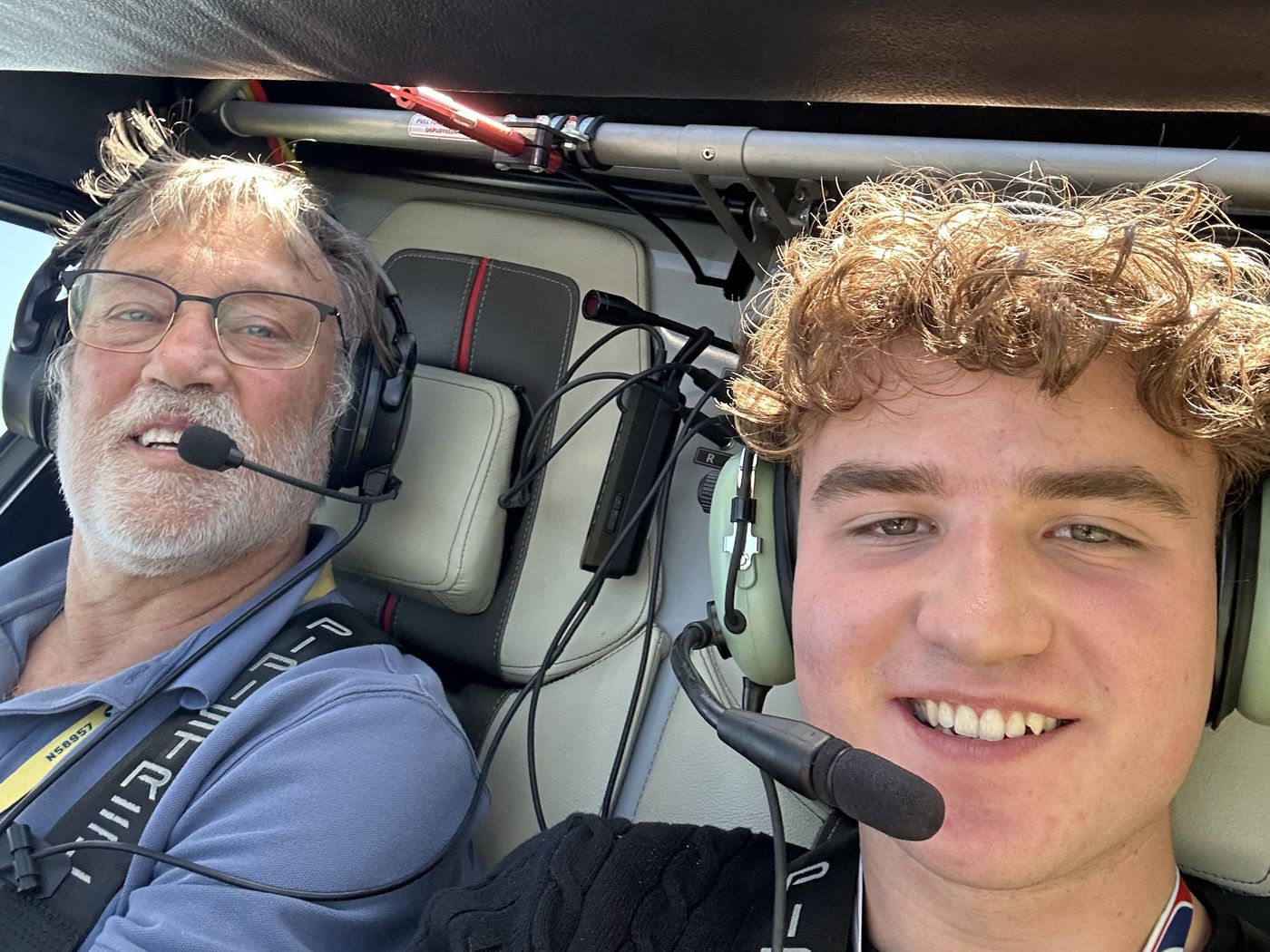
Nathaniel and a pilot in headsets in the cockpit of a small aircraft.
My first flight lesson w/ BETA, summer 2026
Stanley Black & Decker

Stanley Black & Decker

Embedded Software Engineering Intern

Jun – Aug 2025  ·  Towson, MD

  • Built a Python-based white-box testing framework (pytest, pandas) to validate STM32 motor controller firmware against safety and performance requirements.
  • Developed a Python/pandas module to derive motor speed, rotation direction, and fault conditions — invalid hall states, dropped and out-of-sequence transitions — from three-channel hall-effect sensor CSVs.
  • Profiled firmware performance using an Ozone debugger, oscilloscopes, and logic analyzer to identify and resolve system bottlenecks.
  • Led a cross-functional intern team applying data-driven analysis to improve manufacturing workforce retention strategies.
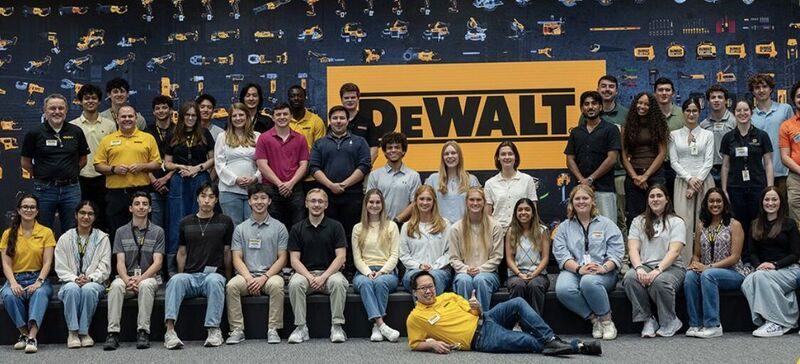
The Stanley Black & Decker summer intern cohort at the DeWalt facility in Towson, Maryland.
Intern cohort, Towson

Research

Intelligent Interactive Internet of Things Lab

Telemetry-Aware 5G Scheduling

Independent Study — Intelligent Interactive IoT (I3T) Lab, Duke

Jan 2026 – Present

  • Configured a 5G testbed on OpenAirInterface with two simulated UEs in RFsim, so latency-critical XR traffic competes with iperf3 background load. Wrote bash scripts to automate setup and teardown.
  • Ran a baseline experiment showing the default gNB scheduler splits radio resources evenly between UEs regardless of latency needs, which motivates priority-aware scheduling.
  • Traced OAI's MAC scheduler source to where the proportional-fair weights are set. Currently modifying the downlink scheduler to prioritize XR traffic.
  • Developing a C++ priority-request pipeline (CMake, Linux IPC) in which an XR workload sends telemetry over Unix domain sockets to a daemon that classifies traffic priority for the RAN.
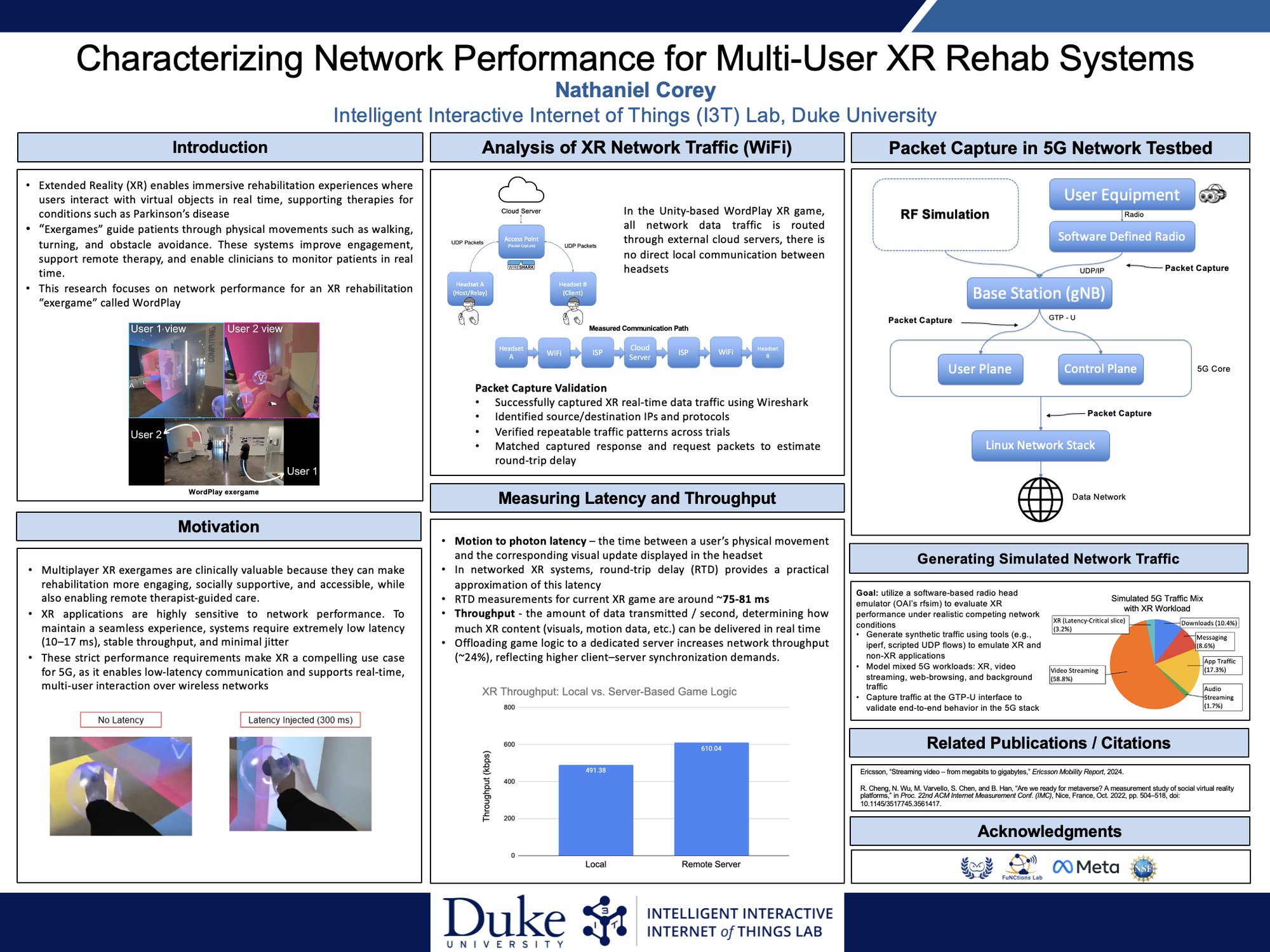
  • Earlier phase (Spring 2026): characterized WordPlay XR traffic between two Meta Quest 3 headsets over Wi-Fi. Found that multiplayer sync was routed through external cloud servers, measured about 75–81 ms round-trip delay, and saw a 24% throughput increase when game logic moved to a dedicated server.

OpenAirInterface · C / C++ · Linux · iperf3 · Wireshark

Research poster: Characterizing Network Performance for Multi-User XR Rehab Systems.
Spring 2026 research poster — click to enlarge

Projects

Rotational Phase Estimator

In progress

Independent Study, Duke ECE

Fall 2026 – Present

  • Building an embedded system that estimates the phase angle and rotational frequency of a rotor driven at 1,500–2,750 RPM in real time, targeting sub-millisecond timing resolution to hold angular resolution under 10°, accurate enough to drive persistence-of-vision LED output from the rotating frame. The application is relevant to combat robotics, where MeltyBrain drivetrains require precise angular sensing.
  • Running on an ESP32-C6. Plan is for beacon-pulse timestamping to route a GPIO edge to timer capture, so edges are latched without CPU involvement, and the phase math will run in software. Timing constraints are important for this project, especially if I later decide to target higher angular resolution updates or to support higher RPM.
  • Configured the IR sensor loop and soldered the first protoboard circuit with a buck converter and battery charger. Currently developing wireless data transfer to speed up collection of test data.
  • Delivering a functional prototype with supporting analysis at the end of the semester.

ESP32-C6 · C++ · Hardware timer capture · Real-time timing analysis

The assembled rotor: an elliptical 3D-printed body with recessed bays holding an ESP32-C6 and IR sensor on a soldered protoboard, a center spindle bolt, a buck converter, a battery charger board, and a 400 mAh LiPo battery, wired together.
Assembled rotor — ESP32-C6 and IR sensor on protoboard, buck converter, charger, and LiPo

Quadrotor Trajectory Control

Sep – Dec 2025

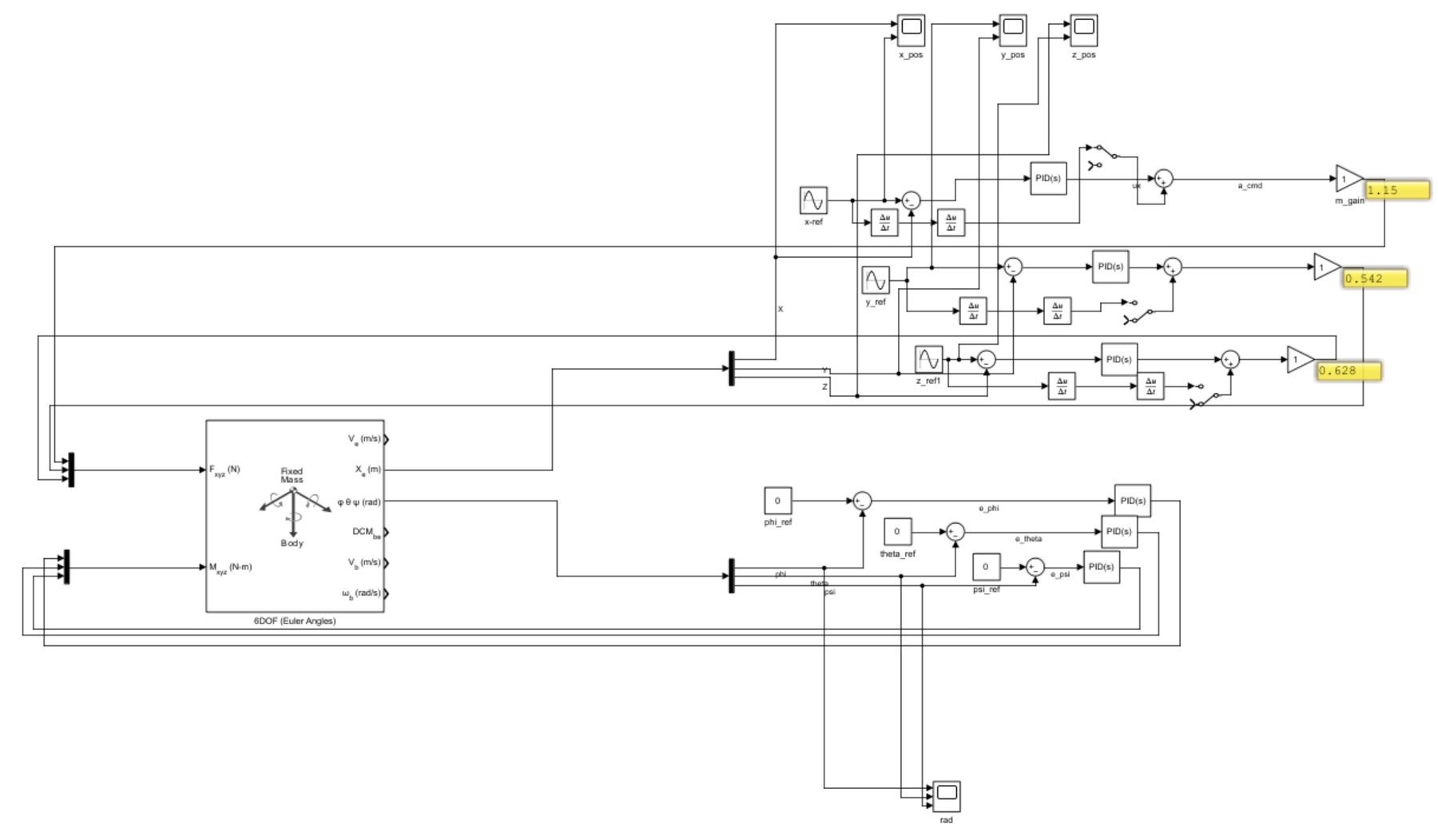
  • Designed and simulated a 6-DOF quadrotor controller using a nested PID architecture with feedforward acceleration, achieving over 50% reduction in settling time and eliminating overshoot versus baseline PID.
  • Validated robustness under a 20% mass mismatch, demonstrating integral action for disturbance rejection and steady-state error reduction.

MATLAB · Simulink · Control design

The Simulink model: a 6-DOF Euler-angle plant block with nested position and attitude PID loops and feedforward acceleration.
The Simulink model — click to enlarge

FPGA-Based Smart Solar Tracker

May 2026

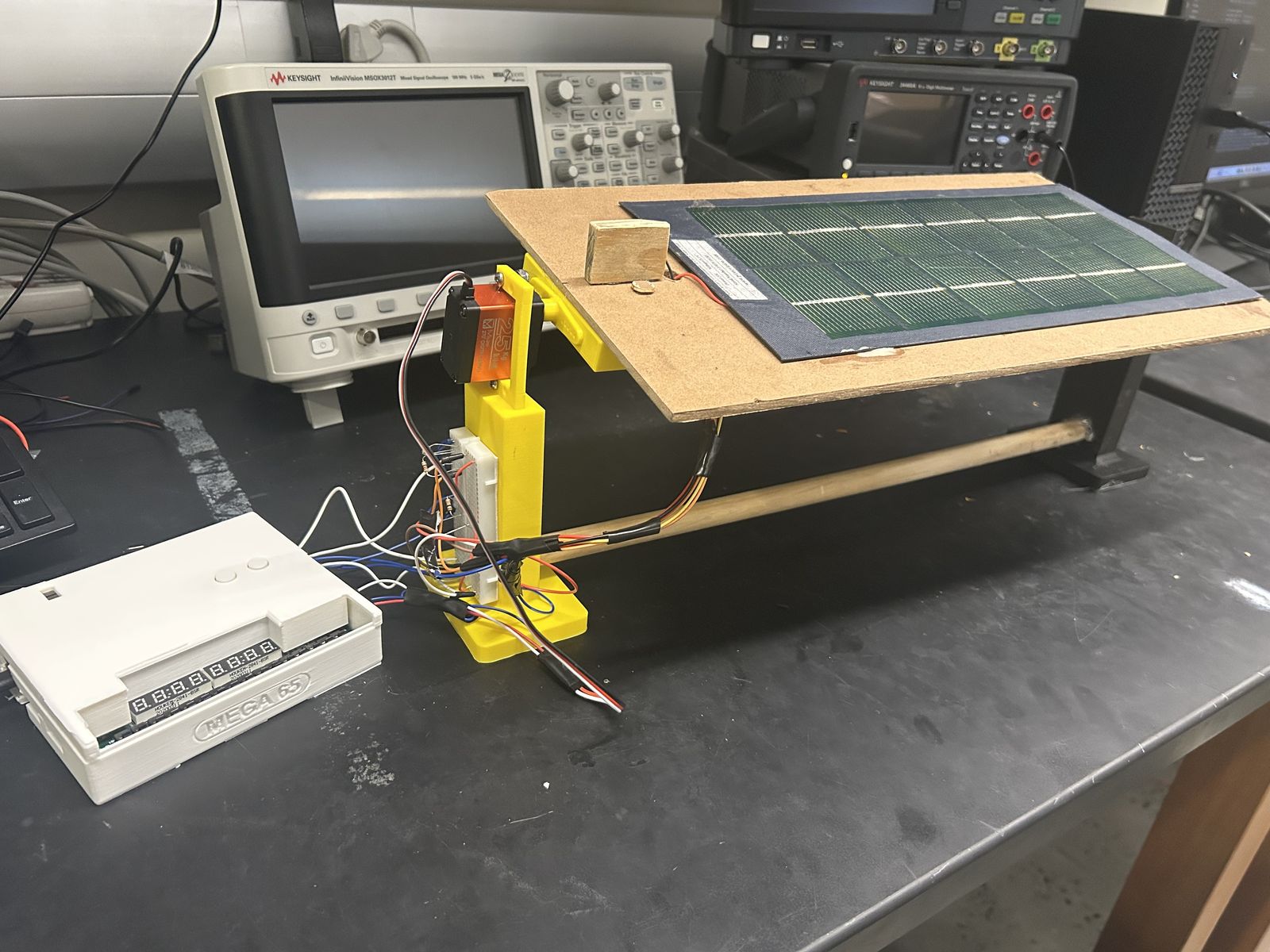
  • Integrated photoresistor analog-to-digital conversion readings and servo motor control through an FPGA-based processor solution written in Verilog and MIPS assembly.

Verilog · MIPS assembly · ADC · Servo control

The solar tracker on a lab bench: a panel on a servo-driven 3D-printed mount, wired to a breadboard and an FPGA development board.
The rig on the bench

Leyman Prosthetic Arm

Embedded Electronics & Controls Subteam Lead, Duke eNable

Sep 2024 – Present

  • Designed an EMG signal acquisition circuit using a differential amplifier and developed Arduino C programs for motor control and signal processing on a client-facing prosthetic arm.

Embedded C · Analog front-end · Motor control

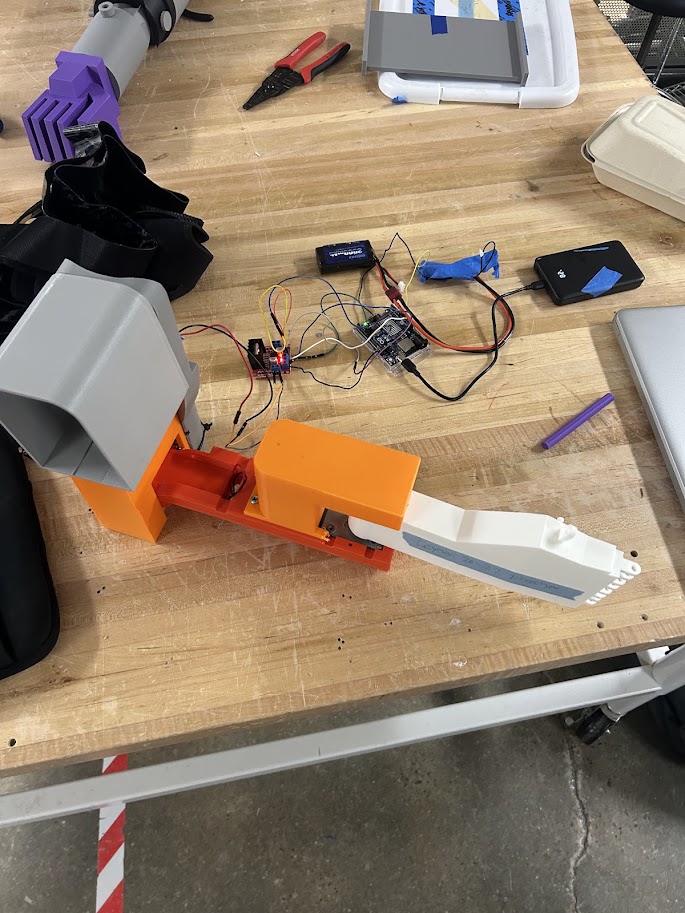
The prosthetic arm prototype: an Arduino and driver electronics in a 3D-printed orange housing above a geared motor, wired to the forearm assembly.
Prototype electronics and drive

16-bit MIPS Processor

Spring 2025

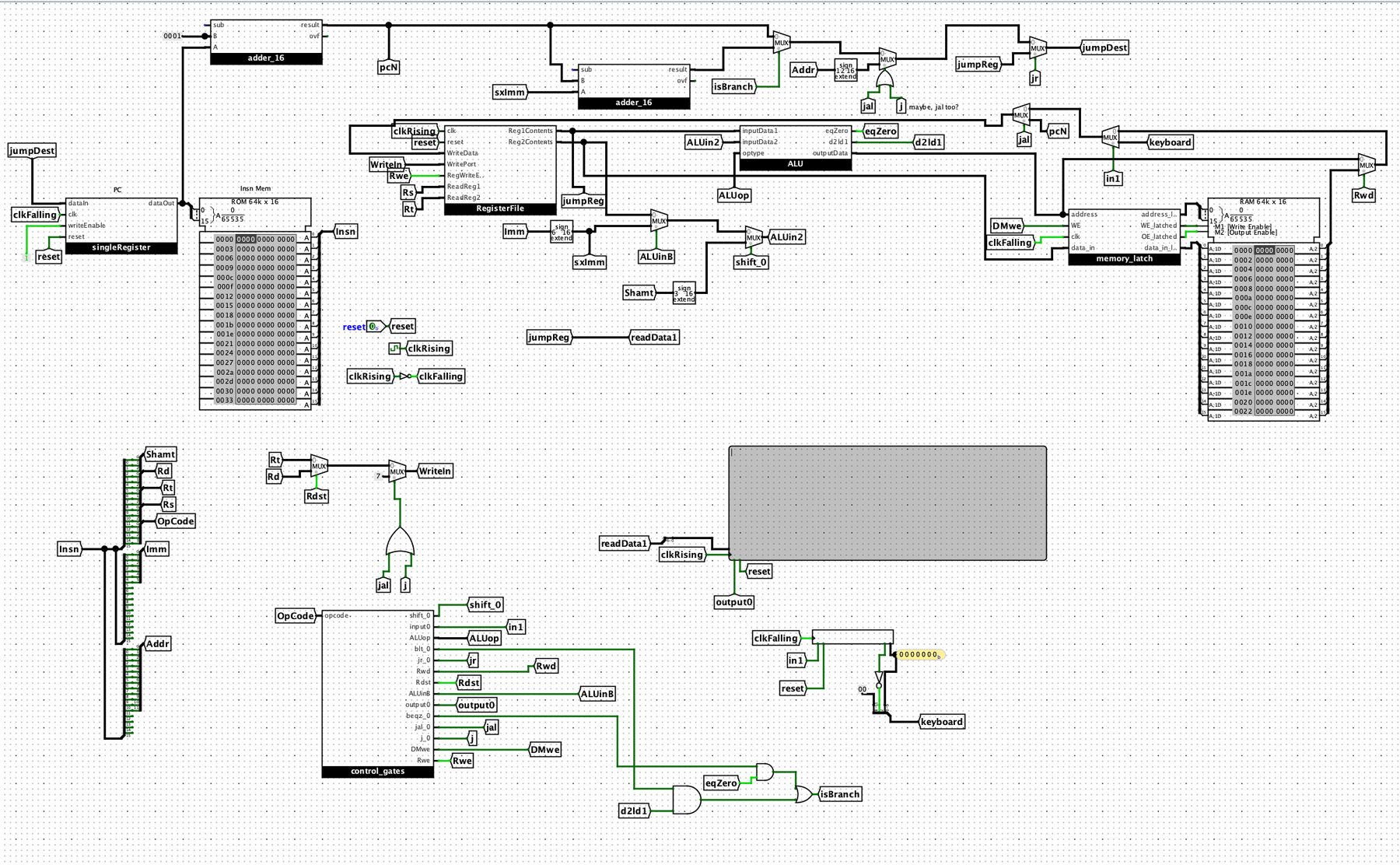
  • Built a CPU from first principles — 1-bit adders, flip-flops, multiplexers, and tri-state buffers assembled into an ALU, a register file with read and write ports, and instruction and data memory.
  • The datapath fetches, decodes, and executes custom 16-bit MIPS instructions, with keyboard input wired in for interactive programs.

Digital logic · Computer architecture · Logisim

The complete processor in Logisim: program counter, instruction ROM, register file, ALU, RAM, and the control-gate decoder below.
The full datapath — click to enlarge

Published Apps

CardFlow — Smart Flashcards

iOS  ·  3,900+ downloads

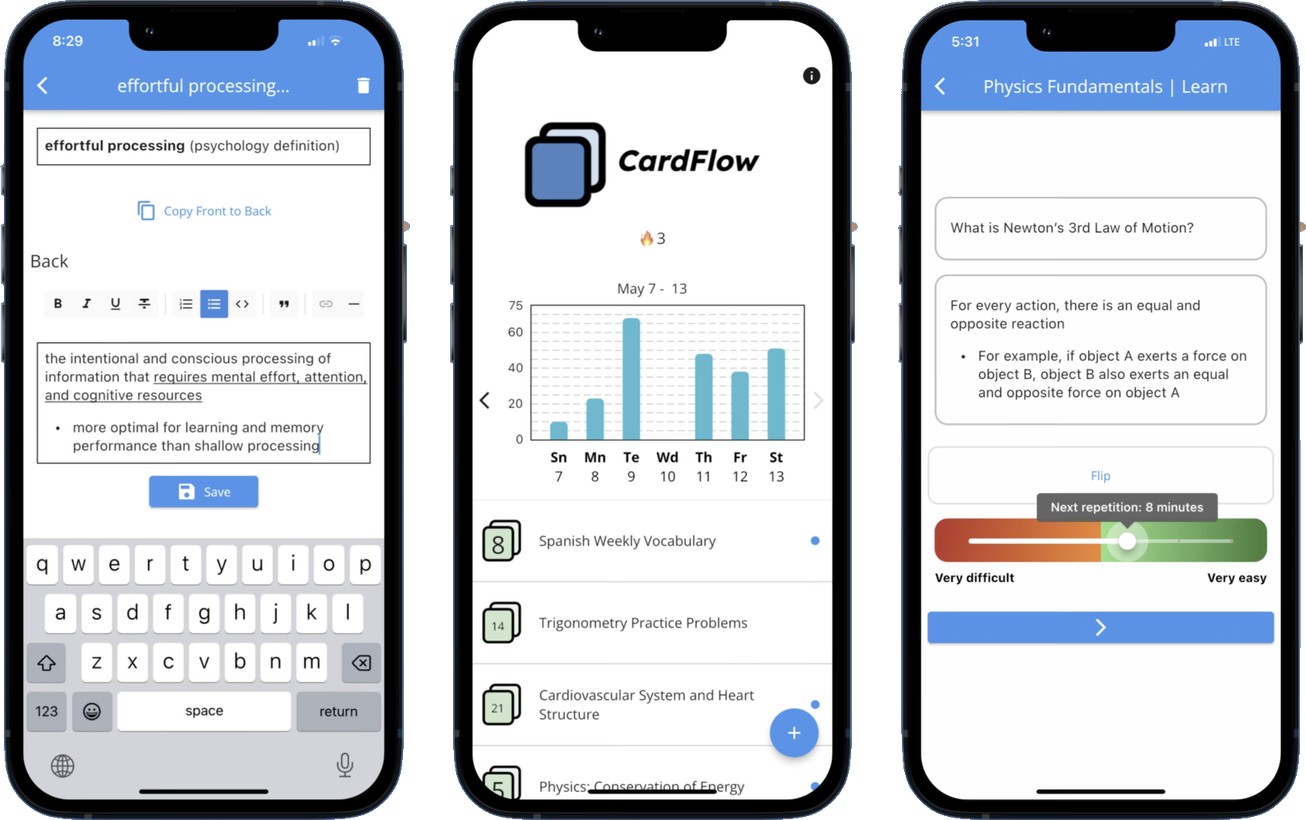
Independently built and published to the App Store while in high school. Image capture and masking tools turn handwritten notes into cards, and an adaptive scheduling algorithm tunes review intervals from user feedback.
App Store  ·  GitHub

Dart · Flutter · SQLite

Three CardFlow screens: the rich-text card editor, the deck list with a weekly review chart, and the spaced-repetition review view.

Piction — Group Pictionary

Android  ·  40,000+ downloads

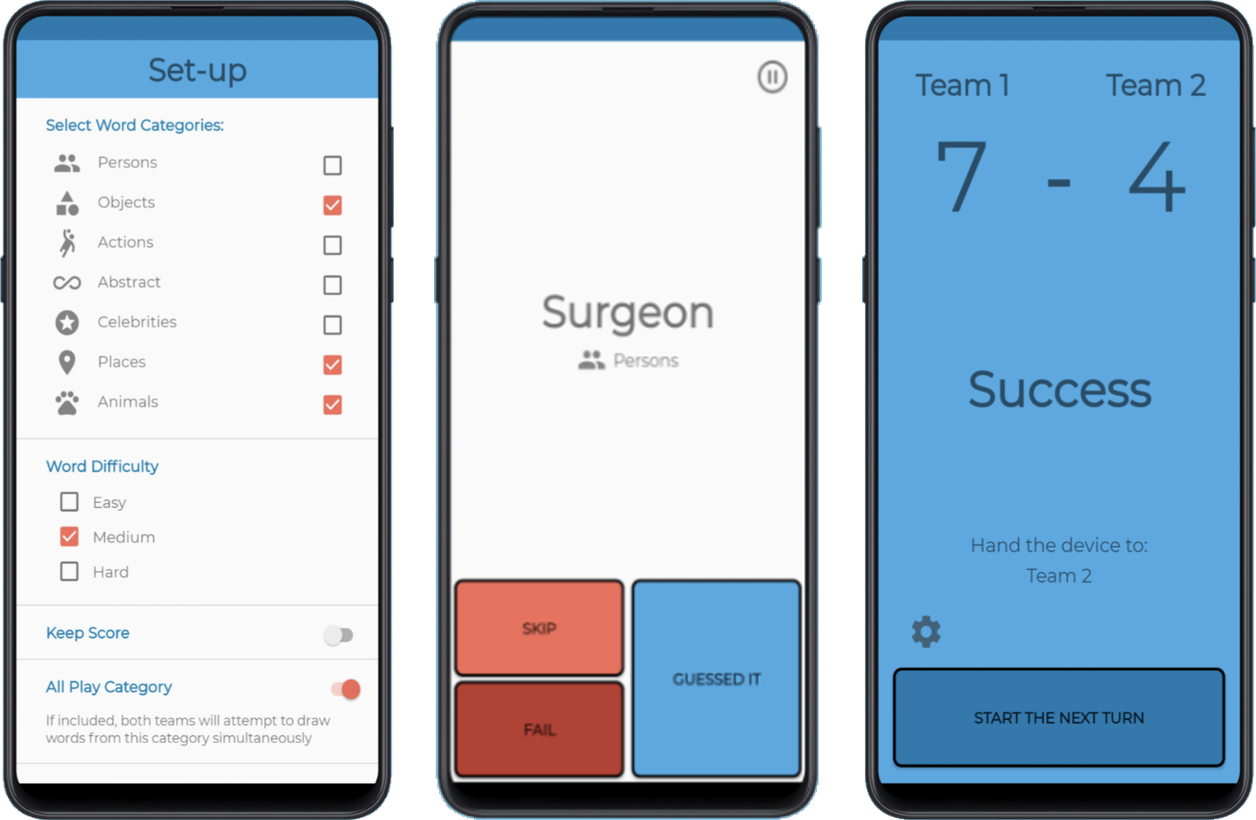
Built and published solo to the Google Play Store while in high school. One phone runs the whole game for the group. It generates words from 7 categories and 3 difficulty levels, with customizable rules, so all players need is pen and paper.
Play Store  ·  GitHub

Java · Android SDK

Three Piction screens: game setup with word categories and difficulty, a live round showing the word to draw, and the automatic scoreboard.

Skills & Education

Embedded & systems STM32 and TI microcontrollers · I2C / UART / SPI · motor control algorithms · sensor integration · real-time systems · hardware-in-the-loop (HIL) testing
Programming C / C++ · Python · Java · MATLAB/Simulink · Git · automated testing (pytest) · mobile app development with Android SDK · Claude Code
Tools & test equipment Oscilloscope · logic analyzer · JTAG / J-Link · Ozone debugger · Code Composer Studio · SPICE · Wireshark · AutoCAD / Inventor
Education Duke University — BSE Electrical & Computer Engineering, BS Computer Science. Graduating May 2027. GPA 3.63.
Coursework Intro to Embedded Systems · Computer Architecture · Digital Systems · Signals and Systems · Microelectronic Devices and Circuits · Control Engineering · Operating Systems · Engineering Design and Communication · Intro to Artificial Intelligence